
Table of Contents
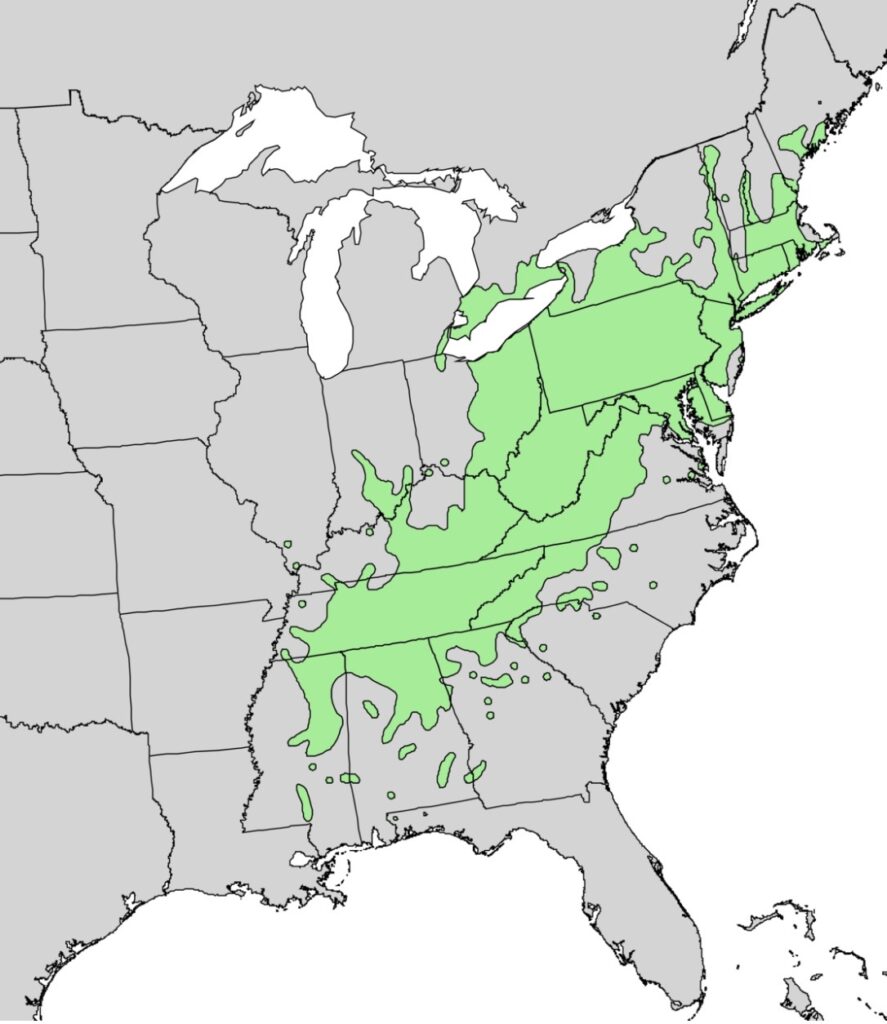
The Long Island Conservation Alliance is working with The American Chestnut Foundation to restore this majestic tree. It once dominated the forests of the eastern seaboard.
The American Chestnut Blight
It is estimated there were between from 3 to 4 billion trees when the Chestnut Blight began in 1904. Within several decades, The American Chestnut was all but wiped out, killed by this airborne fungus.
The chestnut blight was introduced when in 1904 The New York Zoological Garden (today The Bronx Zoo) planted a Chinese Chestnut that carried the blight. The environmental damage was immense. The American Chestnut was the keystone species in our forests. When they disappeared, so did some animal species like The Passenger Pigeon, which used to blacken the skies in their migrations. The oaks stepped in as the major forest feeders, but the food web was severely disrupted.
The American Chestnut Is Not The Only Tree We’ve Lost (or are losing)
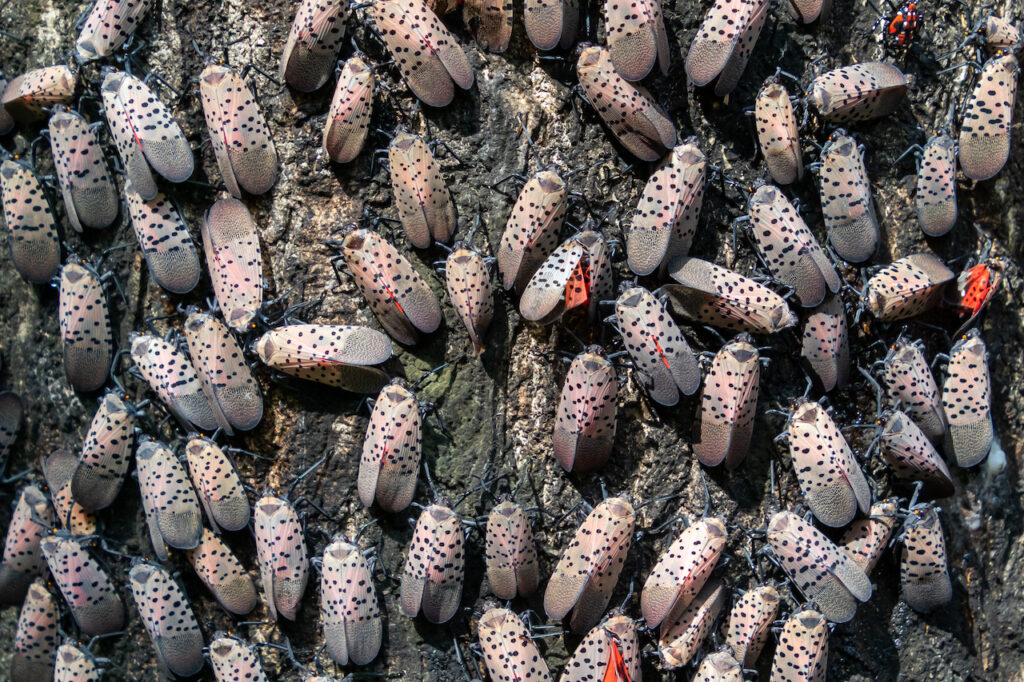
We have seen this again and again. We plant something from somewhere else, and it brings disease. The Chinese Tree of Heaven for instance, is not only highly invasive, seeded along our highways and train lines, it is also preferred habitat for The Spotted Lantern Fly, which came here from China as well. Nothing like home cooking!
Globalization and “Plant-demics”
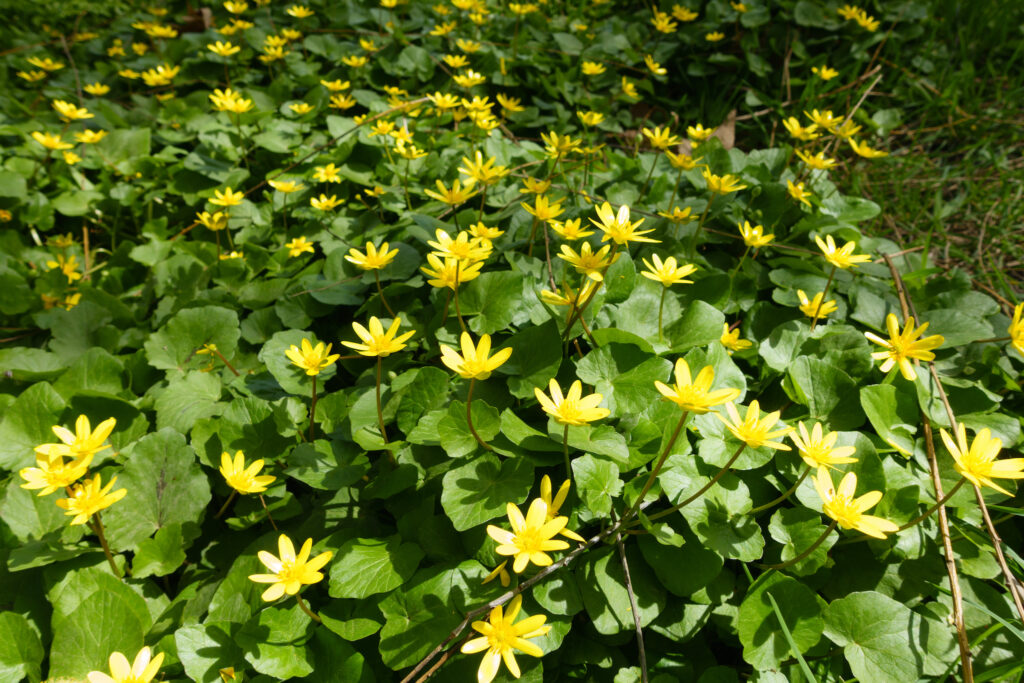
We first introduced The Tree of Heaven here in the late 1700s as a shade tree. Because it was not from here, our native insects left it alone. That’s the benefit of an “ornamental”: they won’t be predated by our insects because they did not evolve to eat them. That’s what they will tell you at the garden store. The insects will leave it alone. Sometimes though, as was the case with Lesser Celandine, a garden escapee can in a matter of decades destroy many square miles. With no insect enemies, there’s nothing to stop them in some cases.
Since The American Chestnut blight, we have seen most of our elms succumb to Dutch Elm Disease. Our ash trees are now dying from emerald ash borer infestations. It is speculated the beetle came to the US in shipping containers in the 1980s from China. Beech Leaf Disease, carried by a nematode, is spreading rapidly, killing trees within 2-7 years. One could say that the globalization of gardening then of trade has led to environmental chaos and habitat collapse.
Arguably, the spread of invasive animals and plants has played at least as important a role in this era of extinctions as climate change itself. We can take it a step further and say that since plants and animals cannot adapt fast enough to climate change, especially considering the extremes in weather it triggers, it amplifies the spread of invasive species, as whole regions are seeing massive habitat disruption from drought, fire and flood. Invasive flora and fauna thrive in disturbed habitat. The very volatility of our weather is creating opportunities for more chaos.
Fortunately for The American Chestnut, Science Marches On!
Faced with the threat of invasive plants and animals and ‘pandemics’ among our flora and fauna, researchers are working to develop methods to restore various species through genetic engineering.
In the case of The American Chestnut, the approach which for The Long Island Conservation Alliance holds out the most promise is one developed at SUNY-ESF. By splicing in a gene from the wheat plant, The American Chestnut Research & Restoration Project has been successful in producing pollen that carries a trait that makes the trees blight resistant. It’s use in fertilizing remnant chestnuts awaits government approval, which is expected this year.
How The American Chestnut Blight Kills
The fungus kills the trees by “girdling” them. It produces an acid that corrodes the tissues that carry water (xylem) and nutrients (phloem) all around the circumference of the tree. The tree starves to death, though as noted the root systems can remain.
Note the canker on this American Chestnut. It’s fate is sealed even while it produces chestnuts.
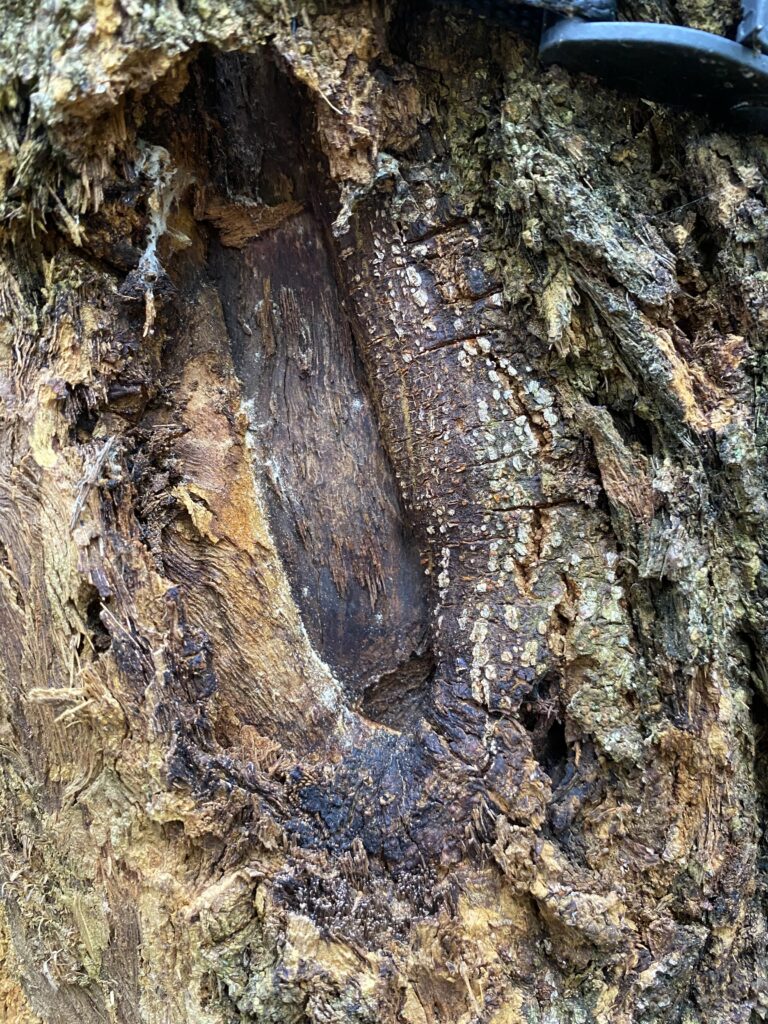
The wheat gene that is spliced it produces a compound oxalate oxidase that neutralizes the oxalate acid from the fungus, which is what is so destructive. The blight may then damage the tree, but not kill it.
Harvesting American Chestnuts From Remnant Stands
The effort to restore the American Chestnut begins with the fact while the fungus wiped out the tree, the roots have often stayed alive. What happens is that the tree regrows from the roots, only to be killed off yet again by a fungus that is now forever in our biome. How many times have these trees resurrected themselves from their still healthy root systems only to be struck down once the fungus finds them again?
During these “truncated” lifespans, these young trees will produce chestnuts. First you need to locate a vestigial stand, find a tree that is mature, then gather the chestnuts for later hand pollination. In nature, American Chestnuts are fertilized by wind blown pollen, but today there are so few American Chestnuts left that there is no wind borne pollen to fertilize them. It must be done by hand until a certain density returns. This species cannot fertilize itself. We plant enough Mother Orchards, we can return the tree in a way that is self sustaining.
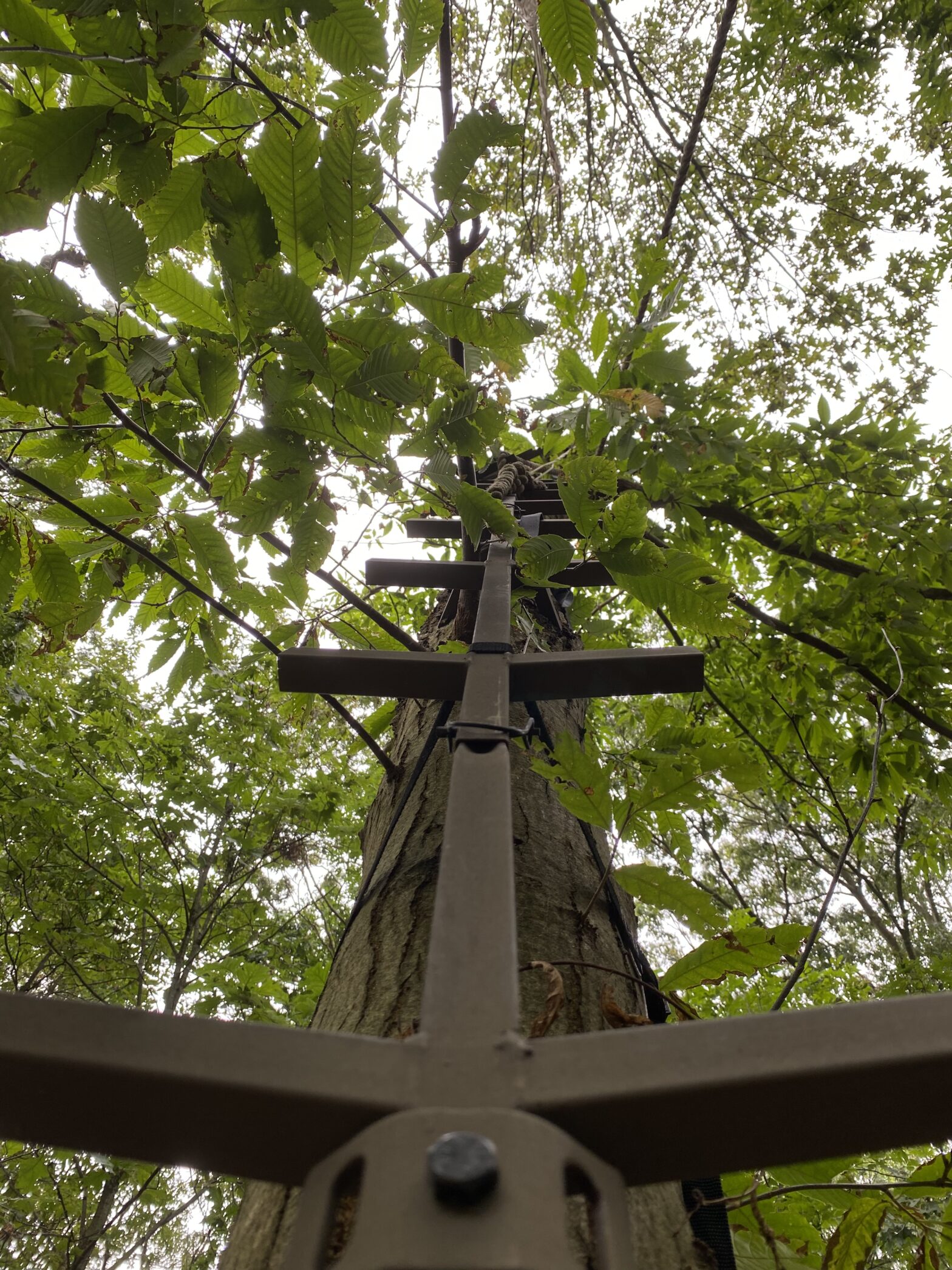
So up we go into the canopy to gather nuts!
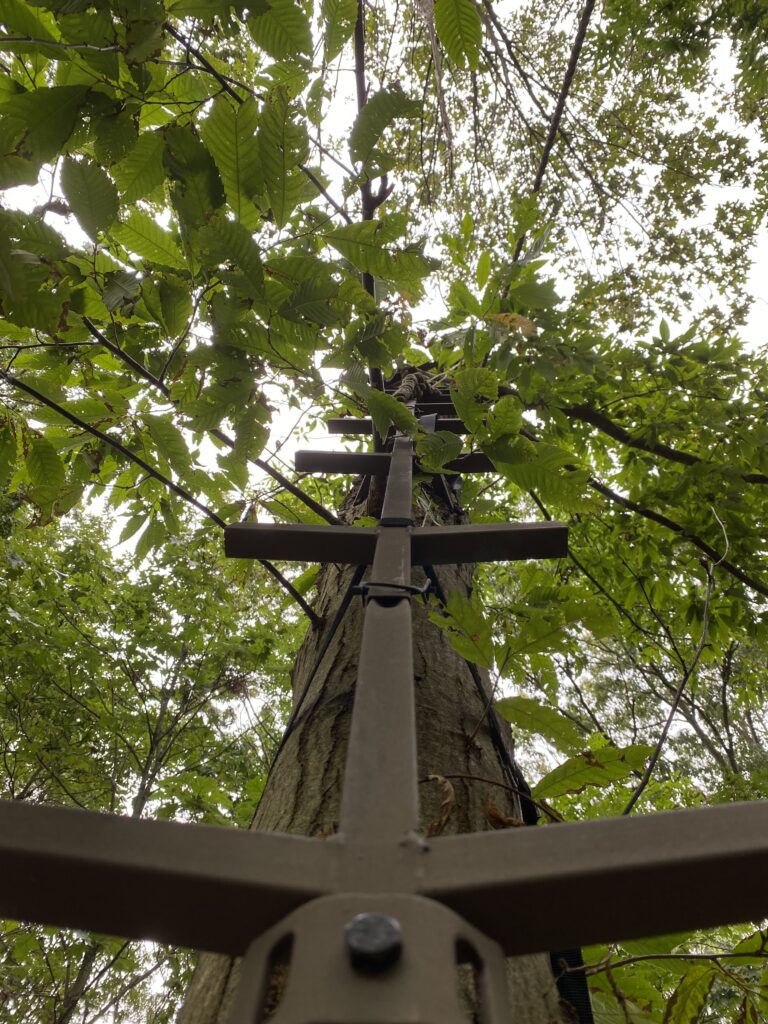
This tree stand is on Long Island’s largest remaining American Chestnut. Here’s a view from the top:
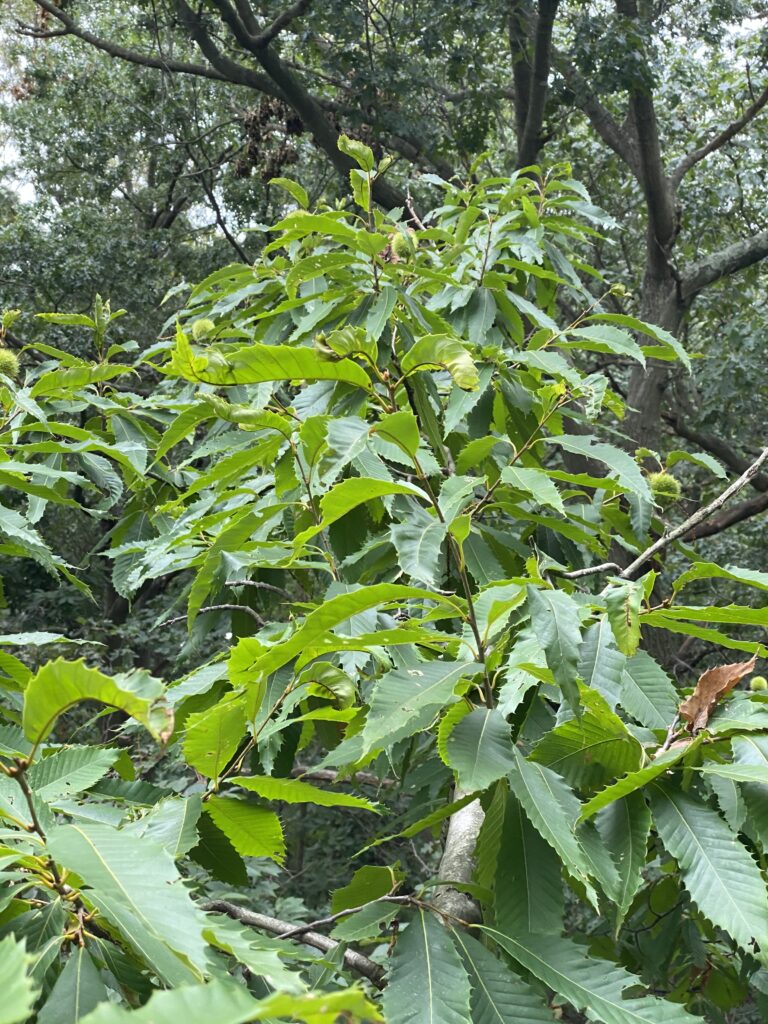
Growing Our American Chestnut Saplings
From the hand pollinated chestnuts, The Long Island Conservation Alliance has been growing saplings. We currently have 200 in inventory which we intend to plant in 2023.
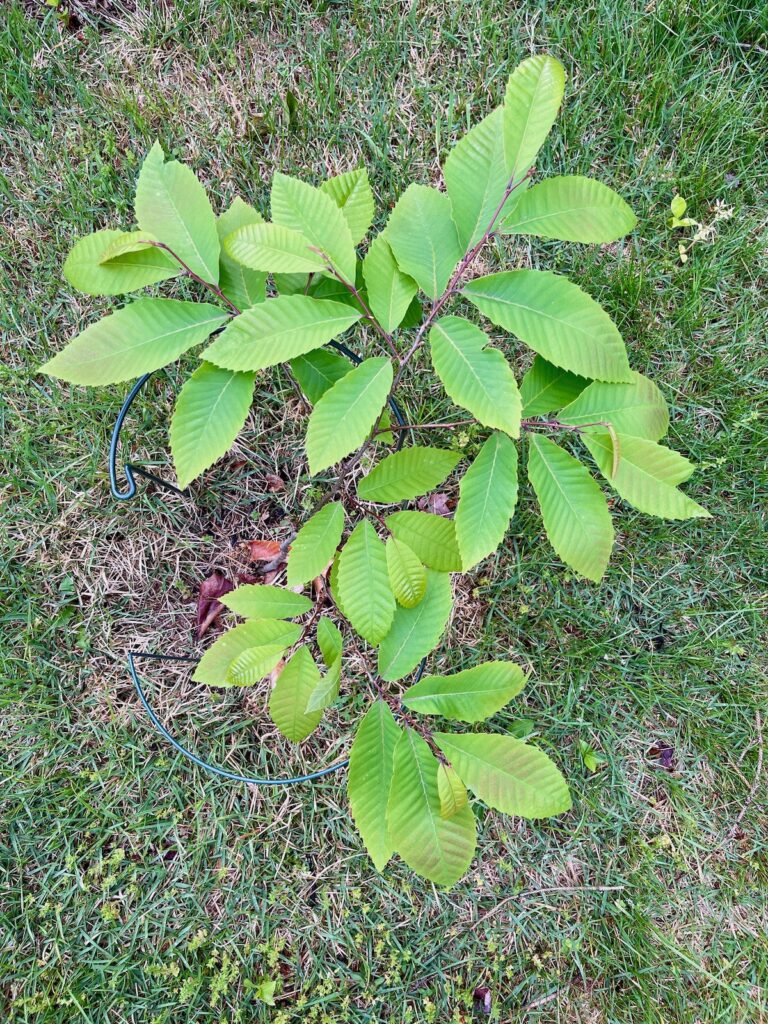
Creating A Mother Orchard
200 saplings works out to 25 “Mother Orchard,” or 8 saplings in each. Eight trees planted close together will in the course of 5-7 years begin to produce nuts. These trees, clustered together, will be cross-pollinated with a genetically engineered American Chestnut. The distribution of this modified pollen awaits the government’s decision to approve their use, which is expected in 2023.
The young trees in the stand, will yield blight resistant American Chestnuts 50% of the time. From this next generation, and with dozens of orchards throughout Long Island, we aim to return the tree here.
Caring For The Mother Orchard
Here is a very informative guide to growing and caring for The American Chestnut from ASF. Here too is a USDA guide, “What It Takes To Bring Back The American Chestnut.” Beyond that, we want all those sponsoring a Mother Orchard to become a community since they are all participating in what is an ongoing scientific effort to return this much mourned tree to us.
Sponsoring A Mother Orchard
The ideal sponsor for an American Chestnut Mother Orchard would need to have a 1000 sq ft to plant the 8 saplings. These tree will get very large over the years — 100 feet tall and ten feet in diameter!
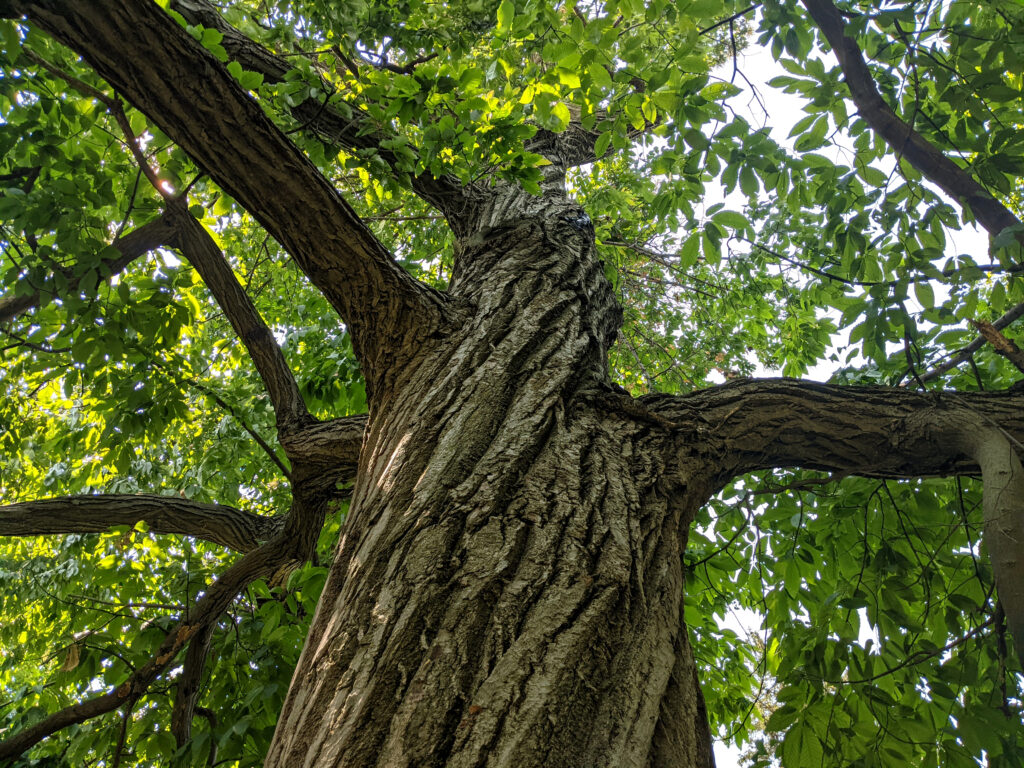
They would also have to commit to the long haul. The earliest your Mother Orchard will produce viable blight resistant chestnuts would be at five years. If you are ready to commit to sponsoring, The Long Island Conservation Alliance and The American Chestnut Foundation will support you over the years it will take to produce the first blight resistant trees. With dozens of local groves derived from local Long Island remnant stands, it is our aim to plant enough healthy American Chestnuts that they can repopulate our forests themselves.
Sponsors will have their groves geotagged and dedicated to the sponsor. The trees of your grove will be tracked over the years, detailing their general health so that we can achieve a large harvest of blight resistant American Chestnuts for our children and grandchildren may find shade, and where local wildlife can again feed from them.
We are offering to sponsors a seven year contract to support their American Chestnut Orchard for $2500. At seven years, you will have some sizable trees 20 ft tall or more producing an increasing number of rare and valuable American Chestnuts, half of which should be blight resistant! It’s a great investment environmentally, aesthetically, and maybe even economically.
For further information, and to schedule a site visit to determine if the location is suitable for an American Chestnut orchard, email Frank Piccininni or call him at +1 (516) 225-8545. He Co-Chairs the Long Island chapter of The American Chestnut Foundation and Co-Founded and serves as a board member for The Long Island Conservation Alliance.
You can also order your American Chestnut Orchard here if you wish to order our standard orchard of eight saplings. Local only, as we are harvesting growing only Long Island-based American Chestnut trees.
Let us do what is only now becoming possible. Let’s rescue The American Chestnut from extinction!


Leave a Reply