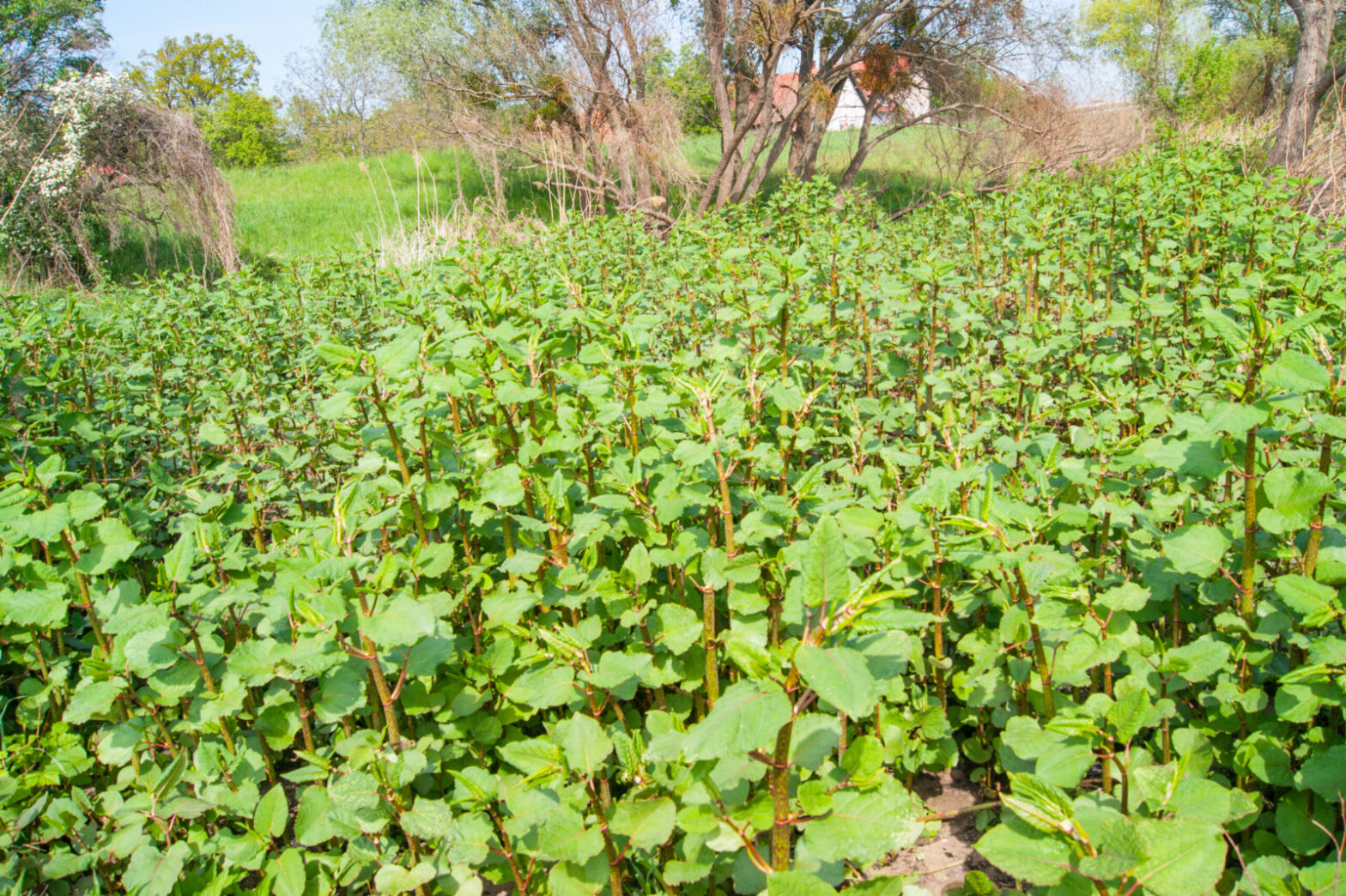
Japanese Knotweed

Japanese Knotweed: Problem #1

We knew that Japanese Knotweed was particularly awful as an invasive, up there with bamboo, kudzu, wisteria, phragmites, oriental bittersweet, porcelain berry, and English Ivy, but after reading this article out of the UK, it may well be that Japanese Knotweed could be the worst of the lot.
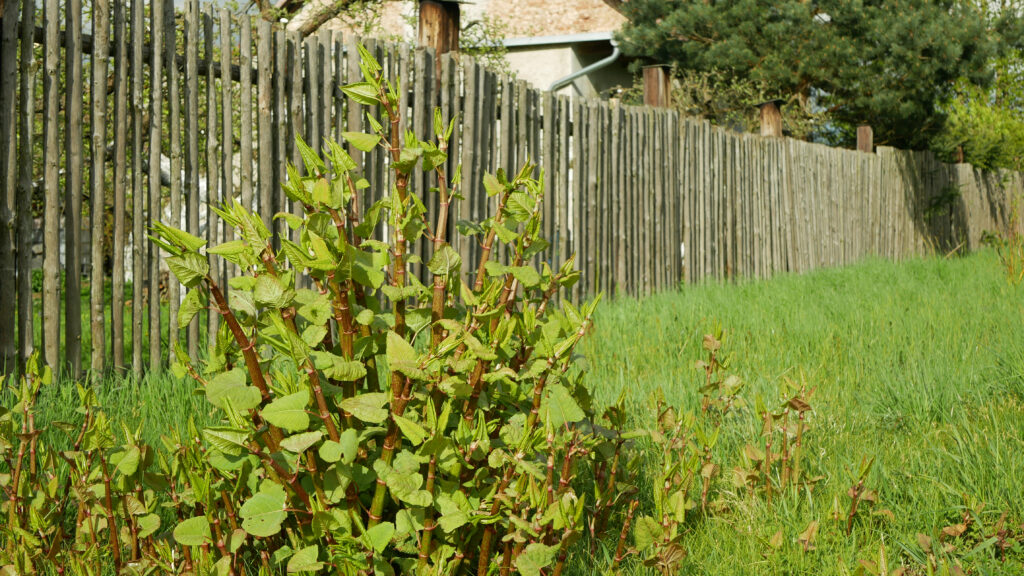
Japanese Knotweed May Already Be In Your Yard
  1. Japanese Knotweed is nearly impossible to eradicate. It’s roots can reach down 9 feet, and it can re-sprout from the tiniest portion of root, even years later.
  2. It’s highly destructive. It evolved as a pioneer species around volcanos in Japan, their roots growing through the hard rock of a recent lava flow. Its roots do the same to concrete.
  3. It’s economically disastrous. Japanese Knotweed is in the process of consuming Fire Island in Cherry Grove, and is well established on many of our waterways and in abandoned lots. Left unchecked, it will overrun local nature and crack your foundation. It is already affecting property values in the UK.

Japanese Knotweed: What Can We Do?


So what do we on Long Island do now? We need to inventory where there are stands of Japanese Knotweed, so we can at least begin to cut them back and keep them from spreading further. It’s on everyone’s property — in our parks, our yards, along our roads. Not to be an alarmist, but it is indeed time to sound the alarm.

As this fascinating — and terrifying — article from the UK makes clear, an entire island under threat, and there is no real solution now. We can only hope to contain it, and even that is going to take a monumental effort. That unfortunately reflects Long Island’s current situation as well:

The Race To Kill The World’s Most Invasive Weed

It’s a fascinating read. It turns out, it was largely the actions of one enterprising Victorian gardener that brought Japanese Knotweed to England. He became an importer of exotic plants, and so it was throughout the last couple of hundred years. Plants were brought in from all over the place, and an industry flourished. Globalization has put a Japanese Maple in every suburban yard it seems.

That is in fact the rule today — most plants for sale are imported, or non-native. People have a tough time finding natives. Most of the time, the non-natives do no worse than take up space where native plants would otherwise grow, an opportunity to create local nature.

But then we have something pernicious, like Japanese Knotweed, and it is in the process of causing enormous damage here. Just the damage it stands to cause on Fire Island’s National Seashore is staggering. Arguably, federal funds are called for here.
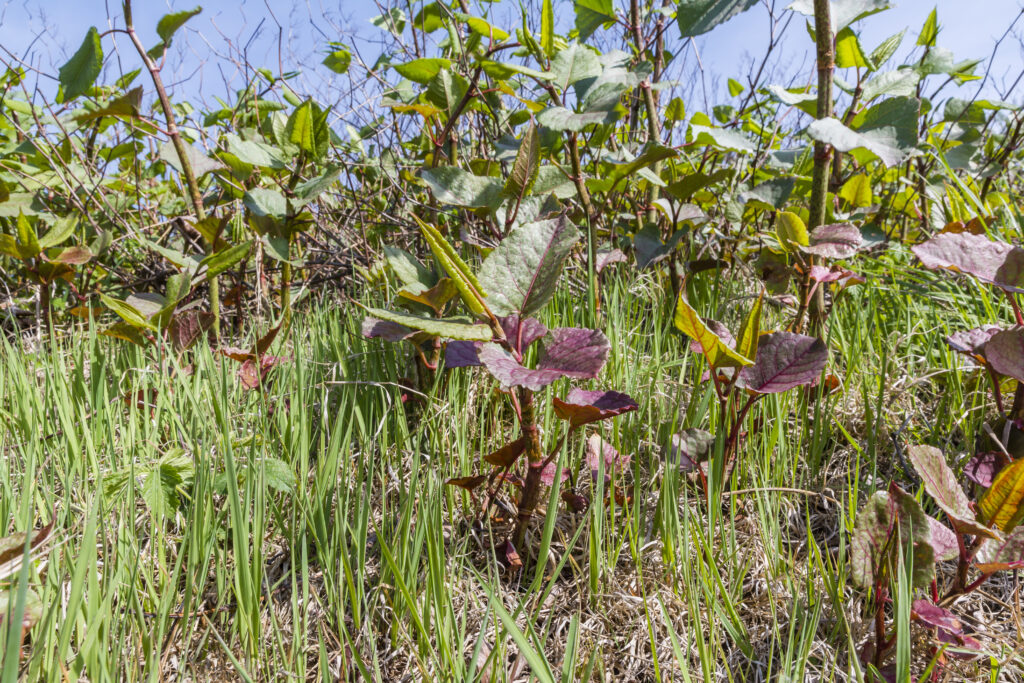
Japanese Knotweed in Springtime


It will take persistent hard labor over a decade to contain. All the other invasive plants now overwhelming Long Island could be addressed at the same time of course.

Are we ready for that? Do we have a choice? If you know of a stand of Japanese Knotweed, drop info in it in your comments or email us at info@longislandconservancy.org. We need to start to get our arms around this for starters.


Comments

17 responses to “Japanese Knotweed: Problem #1”

  1. Luckily the state is doing something about it with the release of biocontrols in the past couple of years. Hoping it works.

  2. […] The American Chestnut, English Ivy Removal, Creating a Bioswale, Planting a Pollinator Garden, Japanese Knotweed, etc. We will have 30-90 second PSAs during the show where we will give people the opportunity to […]

  3. […] Celandine is an awful invasive plant. It could be worse though. You could be dealing with Japanese Knotweed or English […]

  4. […] They have become practically ubiquitous, and that is creating enormous environmental problems. It also as it turns out brings a very high maintenance cost as a municipal tree, whatever the initial cost.That is why from now on, we need a No Callery Pear Diet on Long Island. As we can easily see this time of year, this tree with its telltale white flowers is invading our woods, crowding out native foliage. Their seeds are carried by birds and by the wind, wreaking havoc on what is left of our woodlands. Replace the Callery Pears with native trees as part of a municipal street plan. Prioritize what trees need to be planted and removed in successive years. Our street tree lists for all our municipalities should include only native. It’s the right decision for our environment, and with the right native trees we can lower upkeep costs for communities and home owners. Native is always less expensive.P.S. – This is Japanese Knotweed growing in Central Park yesterday. We are losing the war badly on a number of fronts — bamboo, of course, but this one is the very worst. […]

  5. […] a whole horde of invasive plants — Oriental Bittersweet, bamboo, wisteria, porcelainberry or OMG Japanese Knotweed to name some of the […]

  6. […] yards will. Just pray you don’t have a neighbor who can’t control his bamboo, or worse, Japanese Knotweed, whose roots bust through concrete foundations. The good news is having your yard planted with […]

  7. […] Blue Catfish, Lionfish, Kudzu, Japanese Knotweed, Dandelions, and Snakehead Fish. They may be purchased here online, or onsite at the […]

  8. […] invasive plant. For some, it is “the most hated.” For me, I will reserve that for Japanese Knotweed, but wisteria is a close second. As it grows, it strangles trees, its weight snapping off branches. […]

  9. […] we might well have chosen. It could eventually be a Top 100. These twelve though are horrible. Japanese Knotweed, which threatens Long Island property values. Tree of Heaven and it’s little friend, The […]

  10. […] would do well to plan for invasive plant management today especially with the rampant spread of Japanese Knotweed, considered by some to be the worst invasive plant in the world. It’s roots can blast through […]

  11. […] plants and trees, many from our list of Long Island’s Dirty Dozen, pervade. There’s Japanese Knotweed most everywhere, considered the by many to be the worst invasive plant on the […]

  12. […] (NYSDEC) is battling a variety of threats: From the Emerald Ash Borer to The Spotted Lantern Fly to Japanese Knotweed, to emergent […]

  13. […] thrown in. Much is wind blown, or carried by birds, but mowing has played has helped to propagate Japanese Knotweed, which is perhaps the worst invasive on the planet. It is all over Long Island now and on Fire […]

  14. May Bartens Avatar
    May Bartens

    I first noticed Japanese Knotweed at Cherry Grove in June of 2023. It is so sad to see it taking over in an area that was once full of common milkweed.

  15. marshall Avatar
    marshall

    The story goes that someone had it on their property then cut it all down and dumped it right on the ground. It resprouts from the tiniest sliver.

    Very sad.

    Mowers will spread it. You mow it, it gets worse. No one knows what it is. Mow the weeds is the rule. But then it is spread from property to property. Who washes a mower between jobs, whether a municipality or a landscaping company? We can’t ignore this catastrophe

  16. […] No doubt you’ve seen Japanese Knotweed along our roadsides or along our rail lines. Our rail lines are in particular vectors for a whole host of invasive plants — every one of the “Dirty Dozen.” The LIRR/MTA is asleep at the switch on this, and we are all paying for this inattention.The plant was introduced here in 1870, part of the globalization of gardening. A late flowering plant, and extremely hardy, it was supposedly Frederick Law Olmstead, the architect of Central Park, who imported it. In it’s native Japan, it grows at the base of volcanoes. It’s roots can blast through 7 feet of volcanic rock. It can regenerate from the tiniest piece of root. If their roots are that powerful, what house foundation could withstand them? In England, which introduced the plant in 1820, if you have it on your property, you can’t get a mortgage, and the property loses 15% of it’s value. Small wonder it is considered our worst in our Dirty Dozen. […]

  17. Can you be more specific about the content of your article? After reading it, I still have some doubts. Hope you can help me.

Leave a Reply

Your email address will not be published. Required fields are marked *