
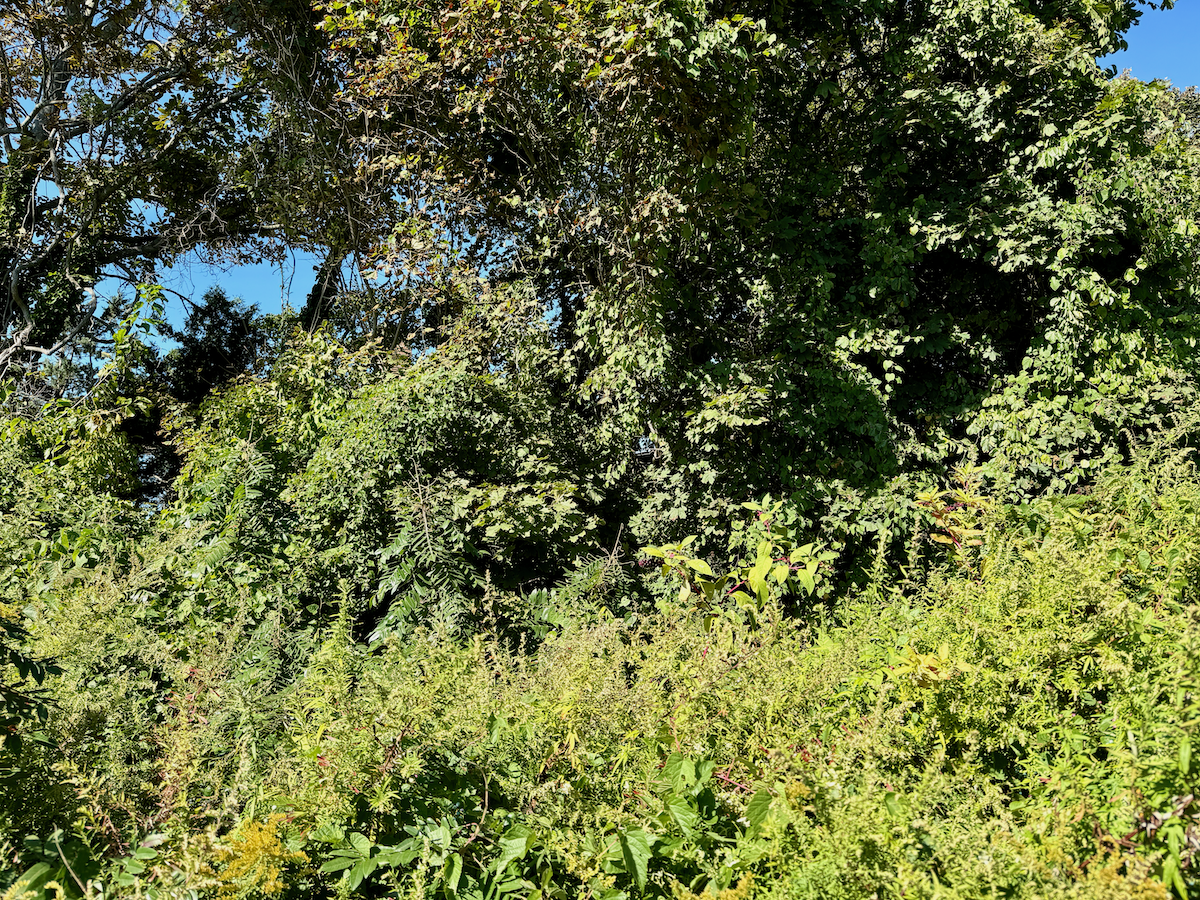
Porcelainberry is one of our Dirty Dozen worst invasive plants. It’s vines are overwhelming our woodlands, strangling and shading them out.
Introduced in the 1780’s from China as a decorative plant, porcelainberry, like so many imported ornamentals, is invasive. Imported plants face few natural enemies. The insects here did not evolve to feed on that plant. It grows therefore practically unchecked, smothering our forests. Birds feed on the seeds, and that spreads it.
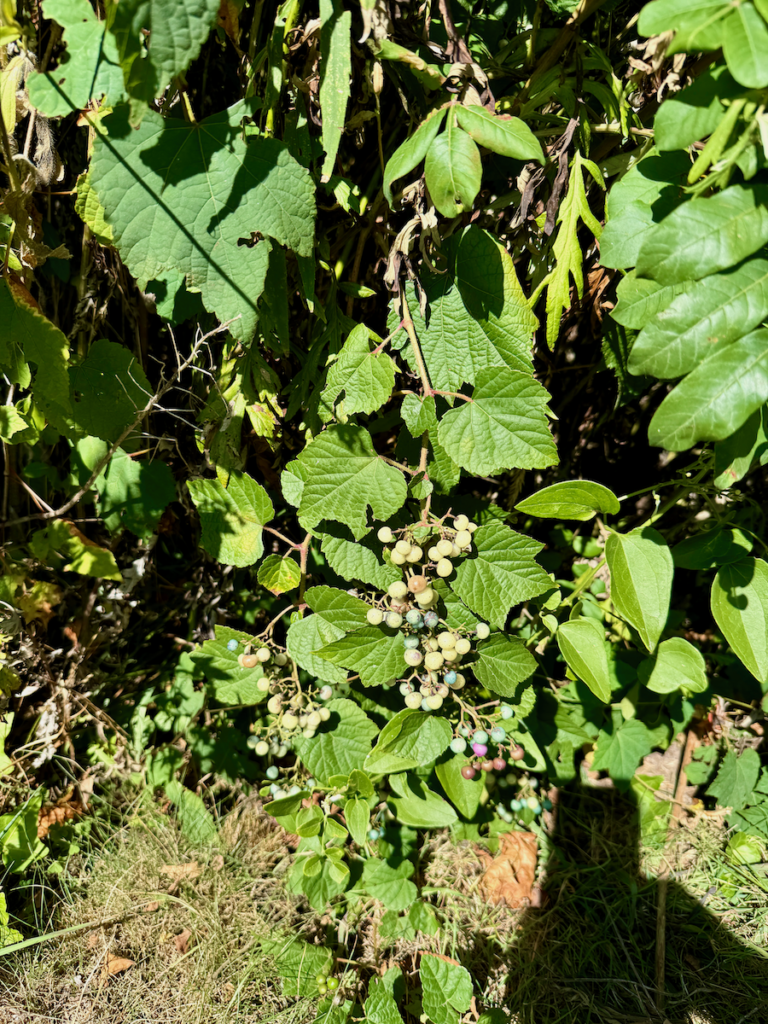
Here, in brief, is a description of the plant and best practices for removing it, from LIISMA, The Long Island Invasive Species Management Association.
Porcelainberry, it turns out, attracts Spotted Lanternflies, as does Oriental Bittersweet, another invasive vine that is one of our Dirty Dozen. Taken together with Ailanthus (Tree of Heaven), it would seem that the best strategy for taking on The Spotted Lanternfly is to remove the invasive plants that it is feeding on, especially TOH, since it is the preferred host.
When the Spotted Lanternfly feeds from The Tree of Heaven, it absorbs toxins from the plant which make it inedible, in the same way that the Monarch Butterfly, upon feeding on milkweed, becomes toxic to would be predators.
Leave a Reply